What Does GSM Mean in Clothing?
In modern streetwear, fabric choice is not just a technical detail—it’s a core brand decision. The weight, structure, and feel of a garment all influence how customers perceive quality. One of the most important fabric indicators you’ll encounter is GSM, short for Grams per Square Meter.
For streetwear products like T-shirts, hoodies, joggers, jackets, and denim, GSM plays a major role in comfort, durability, and overall appearance. At Fame Garments, we regularly help international streetwear brands select the right GSM to balance style, function, and production cost.
So what exactly does GSM mean, and how should you use it when developing your custom streetwear line?
What Is GSM in Fabric?
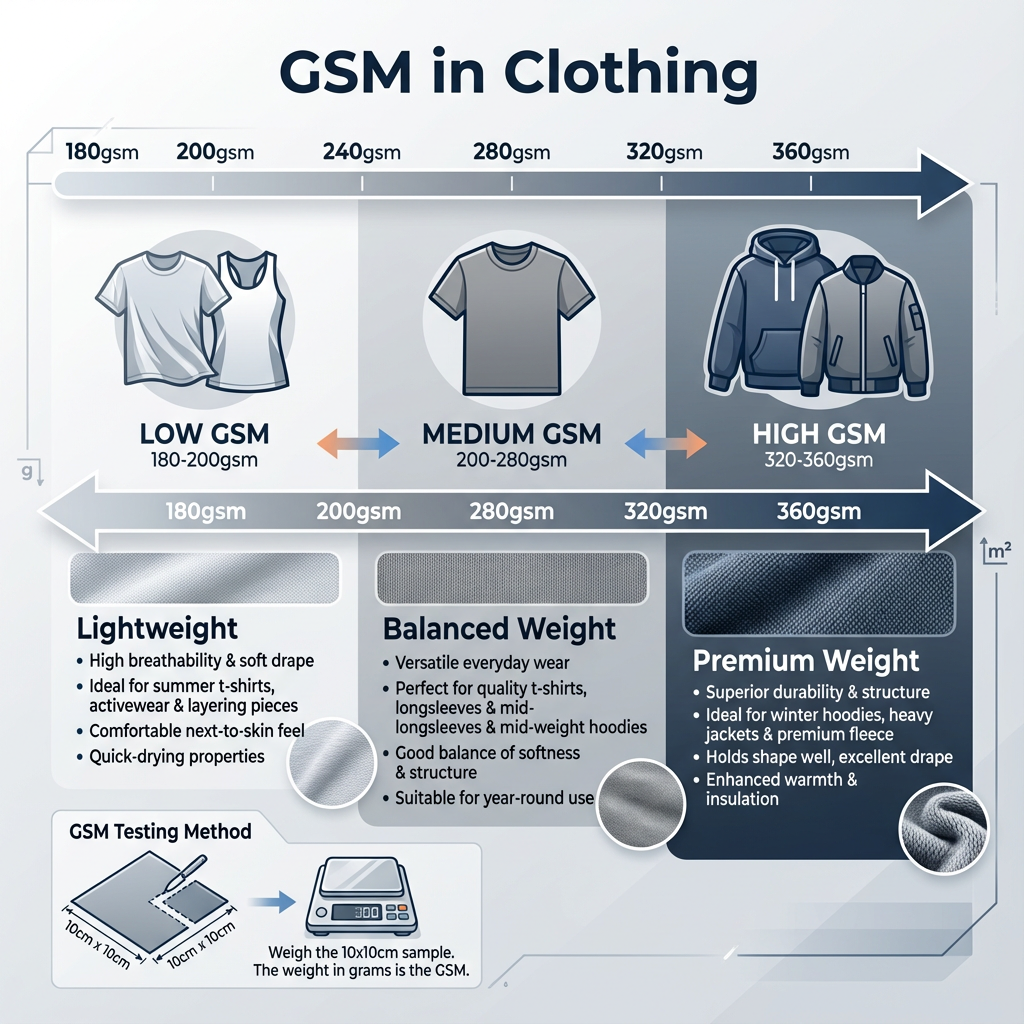
GSM (Grams per Square Meter) measures the weight of fabric by indicating how many grams one square meter of that fabric weighs. It’s a standard unit used across the apparel industry to describe fabric thickness and density.
How GSM Is Measured
A common testing method is:
● Cut a fabric sample measuring 10 cm × 10 cm
● Weigh the sample in grams
● Multiply the weight by 100 to calculate the GSM
This measurement provides a quick, reliable reference for comparing fabrics across suppliers and production batches.
Why GSM Is Important in Streetwear
GSM affects how a garment looks, feels, performs, and costs. In streetwear—where structure and comfort must coexist—the right GSM can elevate a product from basic to premium.
High GSM Fabrics
● Thicker, heavier, and warmer
● Better structure and durability
● Commonly used for hoodies, sweatshirts, heavy jackets, and premium fleece
Low GSM Fabrics
● Lightweight and breathable
● Softer drape
● Ideal for summer T-shirts, lightweight shorts, and casual trousers
For example, a 320–360 GSM hoodie feels solid and high-end, while a 180–200 GSM T-shirt offers enough body without feeling heavy.
Recommended GSM for Different Clothing Types
The ideal GSM depends on garment purpose, climate, and target market. Below is a commonly accepted guideline for streetwear production:
| Clothing Category | Recommended GSM |
| T-Shirts | 160–200 GSM |
| Hoodies & Sweatshirts | 300–400 GSM |
| Joggers & Sweatpants | 240–320 GSM |
Jackets | 300–450 GSM |
Denim Jeans | 340–500 GSM |
Shorts | 180–280 GSM |
These ranges are popular across major streetwear markets such as the U.S., U.K., Europe, and Australia, though final choices should always align with your brand identity.
Does Higher GSM Mean Better Quality?
Not always. While heavier fabrics may feel more premium, GSM alone does not define quality. Fabric performance also depends on several other factors:
Fiber composition – cotton, polyester, blends, recycled fibers
Yarn quality – combed yarn vs. carded yarn
Fabric structure – knit tightness, weave density
Finishing processes – enzyme wash, silicone wash, brushing, pre-shrinking
At Fame Garments, GSM is only one part of our fabric evaluation process. For example, we’ve helped U.K. streetwear brands select 280 GSM fleece with enzyme washing, achieving a soft hand feel, warmth, and durability without unnecessary bulk.
Frequently Asked Questions About GSM
Q1: Is higher GSM always better?
A: No. Higher GSM means heavier fabric, but true quality depends on fibers, yarn, construction, and finishing.
Q2: Can low GSM fabrics still be strong?
A: Yes. Some lightweight fabrics—especially synthetics or tightly knitted cotton—offer excellent durability.
Q3: Where can I find GSM details?
A: GSM may appear on product specifications, fabric datasheets, or can be confirmed directly with the manufacturer.
Q4: How accurate is GSM testing from swatches?
A: Generally accurate within a ±10–15% range, depending on batch variation and finishing.
Q5: Can fabrics with the same GSM feel different?
A: Absolutely. Fiber type, knitting density, yarn quality, and washing methods all affect hand feel.
Q6: Does GSM affect garment cost?
A: Yes. Higher GSM fabrics require more material, which increases fabric and production costs.
Q7: Do ultra-low GSM fabrics need lining?
A: Yes. Fabrics under roughly 50 GSM (such as chiffon or voile) are often transparent and require lining.
Conclusion: Use GSM as a Smart Tool, Not a Guess
For established and growing streetwear brands, understanding GSM allows you to make informed decisions about fabric performance, customer comfort, and production efficiency.
At Fame Garments, we don’t just quote GSM numbers. We support brands with fabric sourcing, design development, pattern making, and efficient bulk production, backed by our experienced manufacturing team, strict quality control, and stable production capacity.
If you’re planning your next streetwear collection, choosing the right GSM is a powerful first step toward delivering consistent quality and a strong brand experience.